
January 28, 2026
How to Prevent Ice Dams on Connecticut Homes: Causes, Warning Signs, and Long-Term Solutions
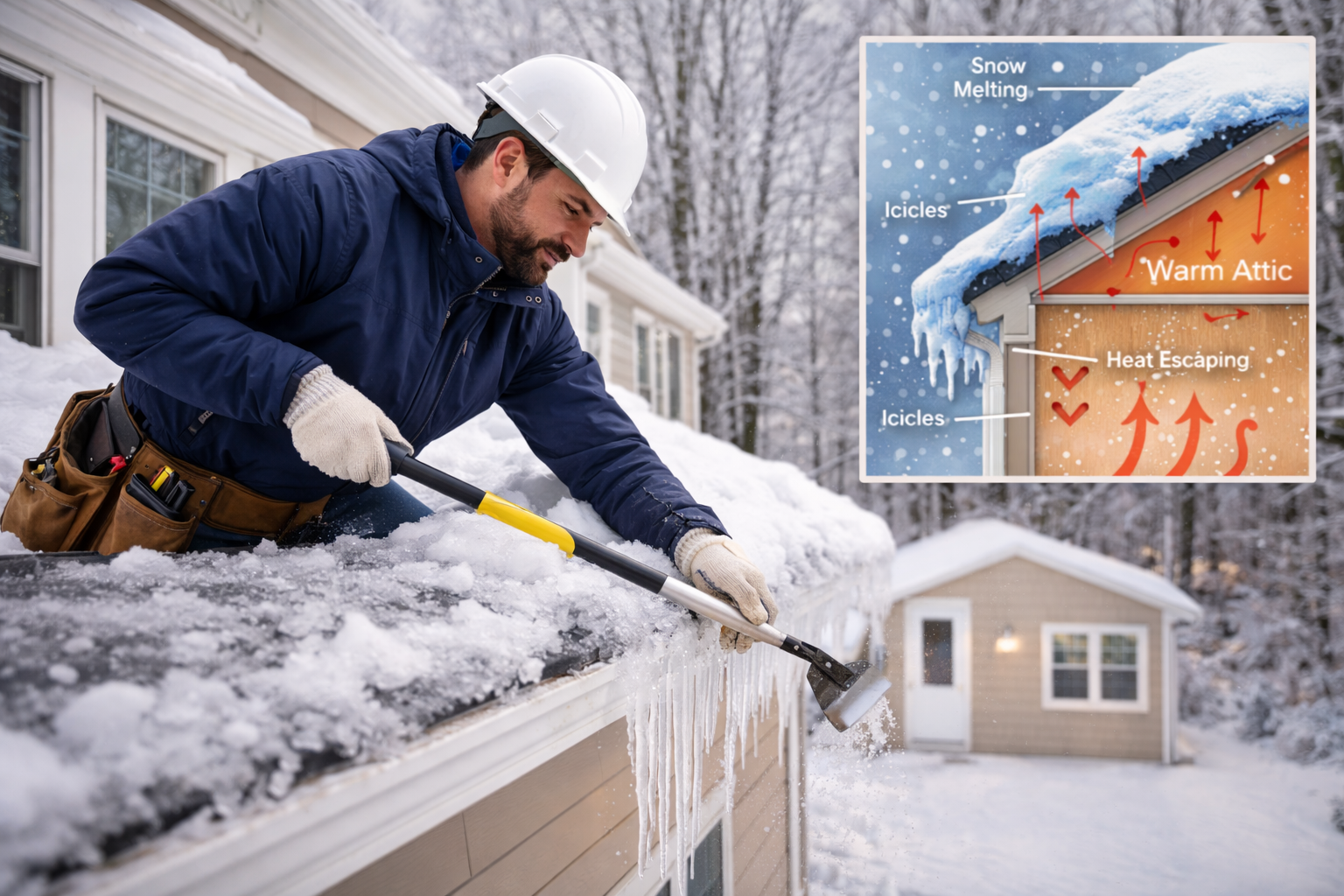
Ice dams are one of the most common, and most damaging, winter problems for Connecticut homeowners. Each year, thousands of homes across the state suffer roof leaks, ceiling stains, insulation damage, and mold growth caused by ice dams that form during winter freeze-thaw cycles.
What makes ice dams especially frustrating is that they’re not caused by snow alone. They’re a symptom of deeper issues involving insulation, ventilation, roofing materials, and heat loss—many of which are common in older Connecticut homes.
This guide explains what ice dams are, why they form so often in Connecticut, how to spot early warning signs, and—most importantly—how to prevent them permanently, not just temporarily.
What Is an Ice Dam?
An ice dam forms when snow on a roof melts due to heat escaping from the home, flows down toward the colder eaves, and refreezes. Over time, this refrozen ice builds up into a ridge—or “dam”—that prevents additional melted snow from draining properly.
When water backs up behind the ice dam, it can:
-
Seep under shingles
-
Leak into attics and walls
-
Damage insulation
-
Stain ceilings
-
Cause mold growth
-
Rot roof decking and fascia boards
Ice dams don’t require large snowstorms. Even small snowfalls followed by freezing temperatures can create conditions for ice dams.
Why Ice Dams Are So Common in Connecticut
Connecticut has one of the most ice-dam-friendly climates in the country due to several overlapping factors.
1. Frequent Freeze-Thaw Cycles
Winter temperatures in Connecticut often hover around freezing. Daytime melting followed by nighttime freezing is ideal for ice dam formation.
2. Older Housing Stock
Many Connecticut homes were built before modern insulation and air-sealing standards. Heat loss through the roof is common.
3. Snow Accumulation
Heavy snowfall combined with prolonged cold creates ideal conditions for ice buildup.
4. Inadequate Attic Ventilation
Poor ventilation traps heat near the roof deck, accelerating snow melt.
5. Complex Roof Designs
Dormers, valleys, skylights, and multiple rooflines—all common in New England architecture—create cold spots where ice dams form first.
What Causes Ice Dams? (The Real Root Problems)
Ice dams are not a roofing problem alone—they’re a building envelope problem. The primary causes include:
1. Heat Loss Through the Attic
Warm air escaping from living spaces warms the roof deck from below, melting snow unevenly.
Common sources of heat loss:
-
Insufficient attic insulation
-
Gaps around light fixtures
-
Attic access hatches
-
Bathroom exhaust fans venting into attic
-
Ductwork leaks
2. Poor Attic Ventilation
Without proper airflow, warm air remains trapped near the roof surface.
Ventilation problems include:
-
Blocked soffit vents
-
Missing ridge vents
-
Improper intake/exhaust balance
-
Older homes without modern venting systems
3. Roof Design & Pitch
Low-slope roofs, valleys, and roof intersections are more prone to ice dams because snow melts and refreezes unevenly.
4. Inadequate Ice & Water Shield
Many older roofs lack sufficient ice-and-water barrier protection at the eaves, allowing leaks once ice dams form.
Early Warning Signs of Ice Dams
Catching ice dams early can prevent major damage.
Watch for:
-
Icicles forming along gutters or eaves
-
Uneven snow melt on the roof
-
Ice buildup near roof edges
-
Water stains on ceilings or walls
-
Peeling paint near exterior walls
-
Damp attic insulation
-
Mold or mildew smells
If you see large icicles consistently forming in winter, it’s often a sign of attic heat loss—not just cold weather.
Why Ice Dams Are Dangerous for Your Home
Ice dams cause more than cosmetic damage. Long-term effects can include:
Roof Damage
-
Lifted shingles
-
Rotting roof decking
-
Compromised underlayment
Interior Damage
-
Ceiling stains
-
Wall damage
-
Insulation saturation
-
Mold growth
Structural Issues
-
Rotted fascia boards
-
Damaged rafters
-
Compromised framing
Higher Repair Costs
What starts as a small leak can turn into a $10,000–$30,000 repair if left unresolved.
Temporary Ice Dam Removal Methods (Short-Term Only)
These methods can help in emergencies but do not solve the underlying problem.
Roof Raking
Removing snow from the first few feet of roof can reduce meltwater buildup.
Pros:
-
Inexpensive
-
Immediate relief
Cons:
-
Labor-intensive
-
Risk of roof damage
-
Not a permanent fix
Calcium Chloride Socks
Fabric tubes filled with calcium chloride melt channels through ice.
Pros:
-
Safer than salt
-
Can relieve pressure
Cons:
-
Only works temporarily
-
Requires repeated application
Professional Steam Removal
Roofing professionals use low-pressure steam to safely remove ice dams.
Pros:
-
Safe for shingles
-
Effective in emergencies
Cons:
-
Expensive
-
Still temporary
Permanent Ice Dam Prevention Solutions for Connecticut Homes
True ice dam prevention requires addressing the root causes, not just removing ice.
1. Improve Attic Insulation (Most Important Step)
Proper attic insulation keeps heat inside your living space—where it belongs.
Recommended Insulation Levels
For Connecticut homes:
-
Attics should be insulated to R-38 to R-60
Older homes often have R-19 or less.
Benefits
-
Reduces roof deck warming
-
Improves energy efficiency
-
Lowers heating bills
-
Improves indoor comfort
-
Prevents ice dam formation
2. Seal Air Leaks in the Attic
Air sealing is just as important as insulation.
Key areas to seal:
-
Attic access hatches
-
Recessed lighting
-
Electrical penetrations
-
Plumbing vents
-
Chimney clearances (with proper fire-rated materials)
Stopping warm air leakage dramatically reduces uneven roof melting.
3. Upgrade Attic Ventilation
Ventilation helps keep the roof deck cold in winter.
Proper Ventilation Setup
-
Soffit vents (intake)
-
Ridge vents or roof vents (exhaust)
-
Balanced airflow system
Ventilation allows cold air to circulate and flush out trapped heat.
4. Install Ice & Water Shield (Critical in Connecticut)
Ice & water shield is a waterproof membrane installed under shingles near roof edges and valleys.
Where It Should Be Installed
-
First 3–6 feet from roof edge
-
Valleys
-
Around chimneys
-
Around skylights
Many Connecticut building codes require ice & water shield during roof replacement for good reason—it prevents leaks even when ice dams form.
5. Replace Aging or Inadequate Roofing Materials
Some roofing systems are more ice-dam-resistant than others.
Best options:
-
Architectural asphalt shingles
-
Metal roofing (excellent snow shedding)
-
Proper underlayment systems
Roof replacement is often the best long-term solution for chronic ice dam problems.
6. Upgrade Gutters & Drainage
Clogged or poorly pitched gutters contribute to ice buildup.
Improvements include:
-
Properly sloped gutters
-
Secure fasteners
-
Gutter guards
-
Ice-resistant designs
Do Heated Cables Prevent Ice Dams?
Heated roof cables are often marketed as ice dam solutions—but they are not ideal for long-term prevention.
Pros
-
Can create drainage paths
-
Helps in emergencies
Cons
-
High energy costs
-
Only treats symptoms
-
Can damage shingles
-
Requires ongoing maintenance
Heated cables should be a last resort—not a primary solution.
Ice Dam Prevention for Older Connecticut Homes
Older homes require special consideration.
Common challenges:
-
Shallow attic spaces
-
Limited insulation access
-
Historic construction methods
-
Balloon framing
Solutions often involve:
-
Dense-pack insulation
-
Interior air sealing
-
Strategic ventilation upgrades
-
Exterior improvements during roofing or siding projects
How Much Does Ice Dam Prevention Cost in Connecticut?
Costs vary based on scope and home size.
Approximate ranges:
-
Air sealing: $1,000 – $3,000
-
Attic insulation upgrade: $2,500 – $7,500
-
Ventilation upgrades: $1,500 – $4,000
-
Ice & water shield during reroof: included
-
Roof replacement: $15,000 – $35,000
Preventative work is almost always less expensive than repairing water damage.
Does Homeowners Insurance Cover Ice Dam Damage?
Insurance often covers damage caused by ice dams, but not the cost of prevention.
Coverage typically includes:
-
Interior water damage
-
Ceiling and wall repairs
-
Mold remediation (sometimes limited)
Insurance does not cover:
-
Roof replacement due to age
-
Poor maintenance
-
Preventative upgrades
Preventing ice dams reduces claim risk and protects home value.
Common Ice Dam Mistakes Connecticut Homeowners Make
-
Assuming ice dams are “normal”
-
Only removing snow without fixing heat loss
-
Ignoring attic insulation
-
Using salt on roofs
-
Installing heated cables instead of fixing root causes
-
Hiring contractors unfamiliar with CT climate
People Also Ask (Optimized for AI Overviews)
Why do ice dams form on Connecticut homes?
Ice dams form due to heat loss, poor insulation, and freeze-thaw cycles common in Connecticut winters.
How do I permanently prevent ice dams?
By improving attic insulation, sealing air leaks, upgrading ventilation, and installing ice & water shield.
Are ice dams dangerous?
Yes. They can cause roof leaks, mold, insulation damage, and structural rot.
Does a new roof prevent ice dams?
A properly installed roof with ice & water shield and ventilation greatly reduces ice dam risk.
Is attic insulation worth it in Connecticut?
Absolutely. It reduces heating costs and prevents winter damage.
Final Thoughts: Protecting Connecticut Homes from Ice Dams
Ice dams are not just a winter inconvenience—they’re a warning sign that your home is losing heat and risking damage. Connecticut’s climate makes proactive prevention essential, especially for older homes.
By addressing insulation, ventilation, air sealing, and roofing systems together, homeowners can eliminate ice dams permanently, improve comfort, and protect their investment for decades.