
February 2, 2026
Should You Replace Windows or Siding First in Connecticut?
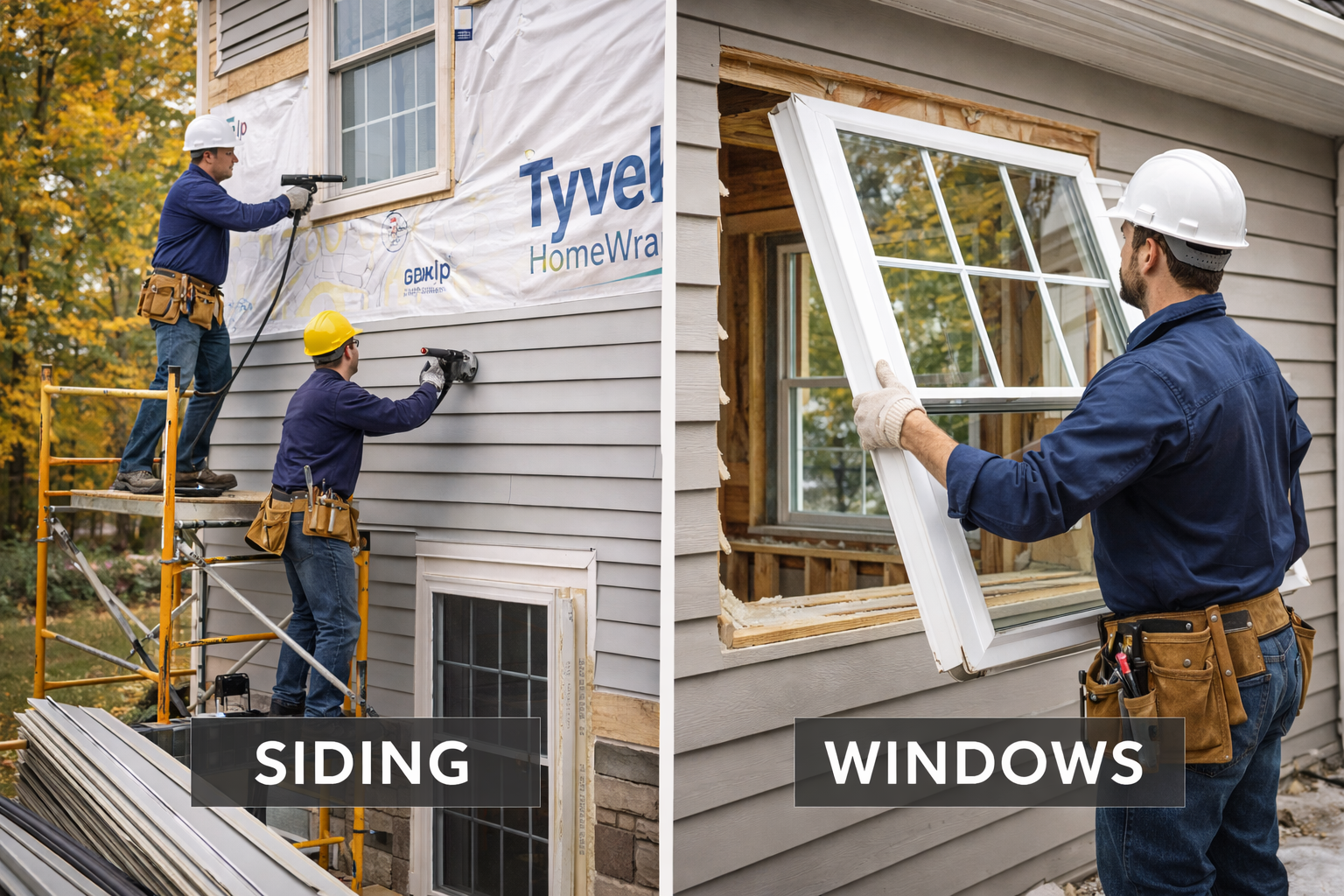
If you’re a Connecticut homeowner planning exterior upgrades, you’ve probably asked this question:
Should I replace my windows first, or my siding?
It’s one of the most common—and most important—decisions homeowners face when remodeling older homes in New England. Both projects improve comfort, energy efficiency, curb appeal, and home value. But doing them in the wrong order can lead to wasted money, redundant labor, and missed performance gains.
This guide breaks down when to replace windows first, when siding should come first, and how Connecticut’s climate, building codes, and home styles should influence your decision—so you can invest wisely and avoid costly mistakes.
Why This Decision Matters More in Connecticut
Connecticut homes face conditions that make exterior upgrades more complex than in many other states:
-
Long, cold winters
-
Freeze-thaw cycles
-
Snow, ice, and moisture
-
Older housing stock
-
Higher heating costs
-
Strict energy and building codes
Because windows and siding work together as part of the home’s exterior envelope, the order of replacement affects:
-
Energy efficiency
-
Moisture protection
-
Installation quality
-
Long-term durability
-
Total project cost
In many cases, the right answer isn’t “windows first” or “siding first”—it’s understanding why one should come before the other for your specific home.
How Windows and Siding Work Together
Windows and siding aren’t independent upgrades. They overlap physically and functionally.
Shared Components
Both systems involve:
-
House wrap
-
Flashing
-
Insulation
-
Air sealing
-
Moisture barriers
Replacing one without considering the other can compromise performance or require re-work later.
When You Should Replace WINDOWS First in Connecticut
There are several situations where replacing windows before siding makes the most sense.
1. Your Windows Are Failing or Drafty
If your home has:
-
Drafts around windows
-
Condensation between panes
-
Rotting window frames
-
Windows that won’t open or close
-
Single-pane or early double-pane glass
…windows should come first.
Why
Failing windows allow heat loss regardless of how good your siding is. In Connecticut’s climate, that means:
-
Higher heating bills
-
Cold indoor temperatures
-
Condensation and moisture issues
Replacing siding before fixing bad windows limits the energy benefits of the siding upgrade.
2. You Plan to Replace Both Within a Few Years
If both upgrades are planned, windows usually come first.
Reason
Siding installers must cut around existing windows. If you install new windows after siding:
-
Trim may need to be removed
-
Siding panels may be disturbed
-
Caulking and flashing may be compromised
Installing windows first allows siding to be installed cleanly around them for a tighter, longer-lasting seal.
3. Your Home Has Original or Builder-Grade Windows
Many Connecticut homes built between the 1960s and early 2000s still have:
-
Aluminum or early vinyl windows
-
Poorly insulated frames
-
Outdated glass technology
Replacing these windows first provides:
-
Immediate comfort improvement
-
Reduced drafts
-
Noticeable energy savings
4. Interior Comfort Is Your Top Priority
If your primary goal is:
-
Reducing cold rooms
-
Improving indoor comfort
-
Lowering heating bills
Windows usually deliver faster results than siding alone.
5. Your Siding Is Structurally Sound
If your siding is:
-
Intact
-
Not warped or cracked
-
Not allowing moisture intrusion
…windows can be replaced without compromising the exterior envelope.
When You Should Replace SIDING First in Connecticut
In other cases, siding replacement should come first—or at least be prioritized.
1. Your Siding Is Damaged or Allowing Moisture In
If your siding shows:
-
Cracks or warping
-
Loose panels
-
Rotting wood underneath
-
Mold or mildew
-
Water stains on interior walls
…siding replacement should come first.
Why
Moisture intrusion damages:
-
Sheathing
-
Insulation
-
Framing
-
Window openings
Installing new windows into compromised wall systems traps problems behind new materials.
2. You’re Upgrading Insulation During Siding Replacement
Modern siding projects in Connecticut often include:
-
Insulated house wrap
-
Foam board insulation
-
Air sealing improvements
These upgrades significantly improve wall performance.
Why Siding Comes First Here
Installing siding first allows:
-
Insulation upgrades behind the siding
-
Better air sealing
-
A stronger base for new windows later
3. Your Siding Is Near the End of Its Lifespan
If your siding is:
-
25–40+ years old
-
Faded and brittle
-
No longer protecting the structure
Replacing windows first won’t solve the larger exterior problem.
4. Curb Appeal Is the Main Goal
If you’re preparing to sell or want maximum visual impact:
-
Siding delivers the biggest exterior transformation
-
Color, profile, and trim changes redefine the home’s look
New siding often has a greater immediate impact than new windows alone.
5. You’re Doing a Full Exterior Remodel
If your plan includes:
-
Siding
-
Trim
-
Gutters
-
Insulation
-
Roofing
Siding should typically be done before or alongside window replacement, not after.
The Best Option for Many Connecticut Homes: Do Them Together
For many homeowners, the most cost-effective and performance-driven option is coordinating windows and siding as one project.
Benefits of Doing Both Together
-
Proper flashing integration
-
Superior air sealing
-
No redundant labor
-
Cleaner installation
-
Better insulation continuity
-
Maximum energy efficiency
-
One project timeline
Cost Efficiency
Bundling projects often reduces:
-
Labor overlap
-
Permit duplication
-
Trim and flashing re-work
How Connecticut Climate Affects the Decision
Winter Heat Loss
Windows are a major heat-loss point, but poorly insulated walls magnify the problem.
Moisture Management
Siding protects against rain, snow melt, and ice dam runoff. If siding fails, window upgrades alone won’t stop moisture intrusion.
Freeze-Thaw Cycles
Connecticut’s climate stresses:
-
Window frames
-
Siding joints
-
Sealants and caulking
Proper sequencing ensures these systems work together—not against each other.
Cost Comparison: Windows vs Siding in Connecticut
Window Replacement
-
$600–$1,200 per window installed
-
Full home: $12,000–$30,000+
Siding Replacement
-
Vinyl: $15,000–$30,000
-
Composite: $25,000–$50,000
Because siding projects are larger in scope, many homeowners phase work—making the order especially important.
Common Connecticut Homeowner Mistakes
-
Replacing windows after new siding (causing re-work)
-
Ignoring insulation during siding projects
-
Focusing only on appearance, not performance
-
Choosing order based on sales pressure instead of building science
-
Hiring contractors who don’t coordinate trades
How to Decide What Comes First (Simple Checklist)
Replace windows first if:
-
Windows are drafty or failing
-
Siding is still in good condition
-
Energy bills are your main concern
-
You plan to replace siding later
Replace siding first if:
-
Siding is damaged or leaking
-
Insulation upgrades are planned
-
Walls need moisture remediation
-
Curb appeal is the priority
Do both together if:
-
Both systems are aging
-
You want maximum efficiency
-
Budget allows a coordinated project
Frequently Asked Questions
Should I replace windows or siding first?
It depends on which system is failing. In Connecticut, windows usually come first unless siding is damaged or allowing moisture intrusion.
Can replacing siding improve window performance?
Yes. New siding with insulation and air sealing improves overall wall performance around windows.
Is it cheaper to replace windows and siding together?
Often yes. Coordinating both projects reduces labor overlap and improves long-term performance.
Will new windows help with heating costs in Connecticut?
Yes. Window replacement can reduce heating costs by 10–30%, especially in older homes.
Does siding replacement increase home value more than windows?
Siding often delivers stronger curb appeal, while windows improve comfort and efficiency. Both add value.
Final Thoughts: Making the Right Choice for Your Connecticut Home
There is no one-size-fits-all answer—but there is a right answer for your home.
In Connecticut, the smartest remodeling decisions consider:
-
Climate conditions
-
Home age
-
Moisture control
-
Energy efficiency
-
Long-term planning
Whether you replace windows first, siding first, or both together, working with a contractor who understands Connecticut homes ensures your investment delivers comfort, protection, and value for decades.
Get a Free Estimate for Your Project
Contact us for a FREE estimate for your home improvement project. Call us or fill out the contact form on this page. We will get back to you shortly.
- Call us: 888-330-8148
- Visit Our Showroom: 3 Simm Lane Suite 3N Newtown, CT 06470