
March 23, 2026
Finishing a Basement in Connecticut: Costs, Moisture Control, Permits, Ceiling Height & ROI
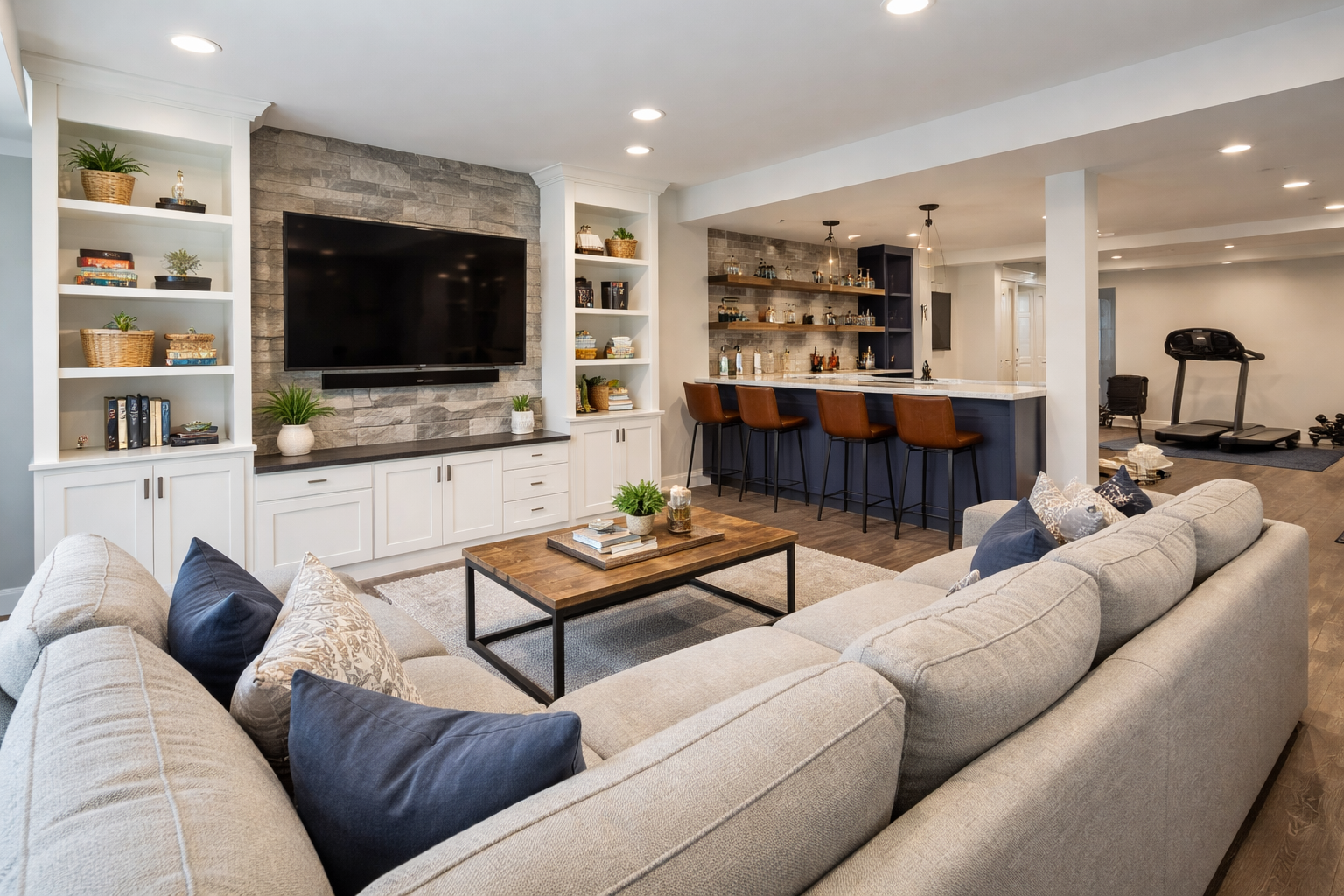
For many Connecticut homeowners, the basement is the biggest untapped opportunity in the house.
It already sits under your roofline. It already has a foundation, walls, and access to utilities. And in a state where moving is expensive and adding square footage above grade can be costly, finishing a basement can be one of the smartest ways to create more usable living space without changing the footprint of your home.
A well-designed basement can become a family room, playroom, guest area, home office, gym, media room, laundry upgrade, or flexible multi-purpose space. But Connecticut basements come with challenges that homeowners cannot ignore. Moisture, insulation, ceiling height, code compliance, and permit requirements all play a major role in whether the project adds long-term value or turns into an expensive mistake.
In this guide, we’ll break down what Connecticut homeowners need to know before starting a basement remodel, including realistic costs, the most common moisture issues, ceiling height considerations, permit requirements, design ideas, and what kind of return on investment you can realistically expect.
Why basement finishing makes sense in Connecticut
Connecticut homes often have basements that are larger than homeowners realize. In many cases, these spaces are used for storage, utilities, or laundry, while the rest of the household feels cramped upstairs.
That is why basement remodeling has become increasingly appealing for homeowners who want to:
-
Add living space without building an addition
-
Create a home office or guest suite
-
Make room for a growing family
-
Improve functionality for multigenerational living
-
Increase resale appeal
-
Get more value from the home they already own
In Connecticut, where many homes are older and lot constraints can make additions more complicated, finishing a basement often offers a more efficient path to added livable space than building outward.
What counts as a finished basement?
A finished basement is more than a painted concrete floor and a sofa in the corner.
In general, a true basement finishing project includes some combination of:
-
Framed and finished walls
-
Insulation
-
Electrical outlets and lighting
-
Flooring suitable for below-grade conditions
-
Finished ceilings
-
Heating and cooling considerations
-
Trim, doors, and paint
-
Moisture management improvements
-
Potential plumbing for a bathroom or wet bar
The goal is to make the basement feel like a natural extension of the home rather than a partially upgraded storage area.
How much does it cost to finish a basement in Connecticut?
Basement finishing costs in Connecticut can vary widely depending on the size of the basement, condition of the existing space, moisture issues, materials, and whether you are adding plumbing or dividing the area into multiple rooms.
A reasonable planning range is:
Basic basement finishing
About $30,000 to $50,000
This often includes:
-
Framing and drywall
-
Basic lighting and electrical
-
Standard flooring
-
Simple open layout
-
Basic insulation and paint
Mid-range basement remodel
About $50,000 to $75,000
This often includes:
-
Higher-quality flooring and finishes
-
Built-in storage
-
Better lighting design
-
Separate rooms or zones
-
Improved insulation and moisture control
-
Upgraded trim and ceilings
High-end finished basement
About $75,000 to $120,000+
This may include:
-
Full bathroom
-
Guest area or bedroom suite
-
Home theater
-
Gym
-
Wet bar
-
Custom cabinetry
-
Higher-end finishes and specialty lighting
Superior Remodelers’ own Connecticut cost content places many finished basement projects in roughly these ranges, with moisture mitigation potentially adding another meaningful layer of cost depending on site conditions.
What affects basement finishing cost the most?
Not all basements are equally easy to remodel. The biggest cost drivers usually include:
1. Moisture problems
If water intrusion, damp walls, musty odors, or past seepage are present, you may need waterproofing or moisture mitigation before finishing begins. Ignoring this step is one of the fastest ways to ruin flooring, drywall, and insulation.
2. Ceiling height
Low basement ceilings can limit layout options and may affect what can legally count as finished living space. Ductwork, beams, and plumbing lines often need careful planning.
3. Open vs divided layout
An open rec room is usually less expensive than a basement with a bathroom, bedroom, office, storage room, and custom millwork.
4. Plumbing additions
Adding a bathroom, sink, or wet bar increases cost substantially because of drain, venting, water supply, and fixture work.
5. Electrical upgrades
Older Connecticut homes may need panel upgrades, new circuits, or additional wiring to support a fully finished basement.
6. Insulation and comfort
Basements can feel cold and damp if they are not insulated correctly. Better insulation and air sealing improve comfort and energy performance but increase upfront cost.
Moisture control is the make-or-break issue
If there is one basement-remodeling truth Connecticut homeowners should remember, it is this:
Do not finish a wet basement.
Before any framing, drywall, flooring, or trim is installed, the basement should be evaluated for:
-
Water seepage after heavy rain
-
Condensation issues
-
Foundation cracks
-
Efflorescence on masonry
-
Musty smells
-
Mold concerns
-
Humidity problems
-
Poor drainage outside the home
A finished basement is only as durable as the moisture strategy behind it.
Common moisture solutions may include:
-
Exterior drainage improvements
-
Gutter and downspout corrections
-
Foundation crack repair
-
Interior drainage systems
-
Dehumidification
-
Better insulation
-
Air sealing
-
Moisture-resistant materials
Because Superior Remodelers already offers basement insulation and spray foam services, this topic is especially aligned with their existing service mix and local authority.
Is spray foam a good option for Connecticut basements?
In many cases, yes.
Spray foam can help improve insulation performance, air sealing, and moisture resistance in basement applications when it is specified and installed correctly. It is especially valuable in Connecticut, where basements often deal with cold temperatures, damp air, and energy-loss issues during long heating seasons.
Benefits can include:
-
Better air sealing
-
Reduced drafts
-
Improved comfort
-
Greater energy efficiency
-
Less chance of condensation problems in certain assemblies
That said, insulation strategy should always match the basement’s condition, wall type, and overall remodeling plan.
Do you need a permit to finish a basement in Connecticut?
In many Connecticut towns, yes.
Permit requirements vary by municipality, but basement finishing often involves work that triggers permits, especially when the project includes:
-
Framing
-
Electrical
-
Plumbing
-
HVAC changes
-
Insulation
-
Egress improvements
-
Structural modifications
If you are adding a bathroom, bedroom, or any legal habitable space, permit compliance becomes even more important.
Connecticut homeowners should never assume a basement project is “just cosmetic.” If the work changes systems or converts the space into livable square footage, permits and inspections are often part of the process.
What about ceiling height requirements?
Ceiling height is one of the most overlooked issues in basement remodeling.
A basement may feel large on paper but still be difficult to finish well if the ceiling is too low or mechanical systems hang too far down. Even when a basement can be finished, low clearance can affect comfort, furniture layout, lighting design, and whether certain rooms are practical.
Before designing the space, your contractor should evaluate:
-
Floor-to-joist height
-
Duct and pipe locations
-
Beam drops
-
Bulkhead placement
-
Potential soffit areas
-
Whether selective rerouting is possible
A thoughtful design can often make a basement feel taller and brighter even when structural limits exist.
Can you add a bedroom in a Connecticut basement?
Possibly, but not automatically.
A basement bedroom typically needs to meet code requirements related to safety and egress. That usually means having a compliant means of escape, along with proper electrical, ventilation, and layout considerations.
This is one area where DIY assumptions can create major resale and safety problems. A room that a homeowner calls a “bedroom” may not legally qualify as one if it does not meet code standards.
That is why it is so important to decide early whether the basement is being designed as:
-
General living space
-
Guest area
-
Home office
-
Playroom
-
Media room
-
Legal bedroom suite
Each use case can affect design and compliance requirements.
Best finished basement ideas for Connecticut homes
The best basement remodels are designed around how the household actually lives.
Popular options include:
Family room or media lounge
Great for households that need overflow living space without changing the main floor.
Home office
Ideal for remote or hybrid work, especially when you need privacy away from kitchen and family noise.
Kids’ playroom
A finished basement can create a dedicated zone for toys, games, and indoor recreation.
Guest suite
Works well for visiting family, adult children, or multigenerational living when paired with a bathroom.
Home gym
A practical use for below-grade space, especially with rubber flooring and improved ventilation.
Laundry and storage upgrade
Not every basement remodel needs to become a luxury lounge. Sometimes the best investment is making utility areas more functional and attractive.
Flexible multi-zone layout
For many Connecticut homes, the smartest design is not a single-purpose basement. It is a mixed-use space with a TV area, play area, desk nook, storage, and possibly a bathroom.
Basement flooring: what works best below grade?
Basement flooring should never be chosen the same way you would choose flooring for a second-floor bedroom.
Because basements are below grade, materials need to be selected with moisture, durability, and temperature in mind.
Common options include:
-
Luxury vinyl plank
-
Tile
-
Engineered systems rated for below-grade use
-
Carpet tiles in select applications
The best flooring depends on the basement’s dryness, intended use, and desired comfort level.
How long does a basement finishing project take?
For many Connecticut homeowners, a typical finished basement project takes roughly 4 to 8 weeks, depending on complexity, permitting, inspections, layout changes, and added plumbing work. Superior Remodelers’ current timeline guidance places finished-basement projects in that general range.
A general project sequence often looks like this:
-
Planning and design
-
Permits
-
Moisture corrections if needed
-
Framing
-
Mechanical rough-ins
-
Insulation
-
Drywall
-
Flooring and trim
-
Paint and finish work
-
Final inspection
More complex layouts with bathrooms, specialty ceilings, or custom built-ins can take longer.
What kind of ROI does a finished basement provide?
A finished basement usually does not deliver the same resale math as a kitchen or bathroom remodel on a dollar-for-dollar basis, but it can still provide strong value.
Why?
Because buyers respond to usable square footage, flexibility, and move-in-ready homes. A clean, bright, dry, well-designed finished basement can make the entire home feel larger and more functional.
A basement remodel may improve:
-
Buyer appeal
-
Perceived square footage utility
-
Family functionality
-
Marketability
-
Time on market in some situations
The real value often comes from a combination of lifestyle improvement now and resale appeal later.
Signs your basement is a good candidate for finishing
Your basement may be a strong remodeling candidate if:
-
It stays mostly dry year-round
-
Ceiling height is workable
-
Utilities can be integrated into a clean layout
-
You need more functional living space
-
Moving is less attractive than remodeling
-
The main floor feels crowded
-
You want a better return from unused square footage
Signs you should solve problems before finishing
You should hit pause and address underlying issues first if:
-
You notice active leaks or seepage
-
The basement smells musty
-
Humidity is consistently high
-
Water appears after storms
-
There are visible foundation cracks
-
The floor feels damp
-
Mold or staining is present
-
The basement has chronic temperature problems
Finishing over these issues rarely saves money. It usually multiplies the cost later.
How to plan a successful basement remodel in Connecticut
A successful basement project starts with the right order of operations:
Step 1: Define the goal
Do you want entertainment space, a guest zone, a work-from-home area, or flexible family square footage?
Step 2: Evaluate the basement condition
Assess moisture, ceiling height, insulation needs, and mechanical layout before designing finishes.
Step 3: Set a realistic budget
Include allowances for the unknown, especially in older homes.
Step 4: Prioritize comfort and durability
Basement materials should be selected for below-grade performance, not just appearance.
Step 5: Work with an experienced Connecticut remodeling contractor
Local experience matters because climate, housing stock, and town-level permit expectations all shape the project.
Final thoughts
Finishing a basement in Connecticut can be one of the most practical ways to gain more space, improve daily living, and strengthen long-term home value.
But the best basement remodels are not built around finishes alone. They are built around moisture control, code compliance, smart layout planning, and materials designed for below-grade conditions.
If the space is dry, the layout is thoughtful, and the work is done correctly, a finished basement can become one of the most-used and most-loved parts of the home.
And for Connecticut homeowners who need more room but do not want the cost and complexity of moving or building a full addition, that can be a very smart investment.
