
October 23, 2026
Spray Foam Insulation Cost in Connecticut: 2026 Prices, Types, and What Affects Your Estimate
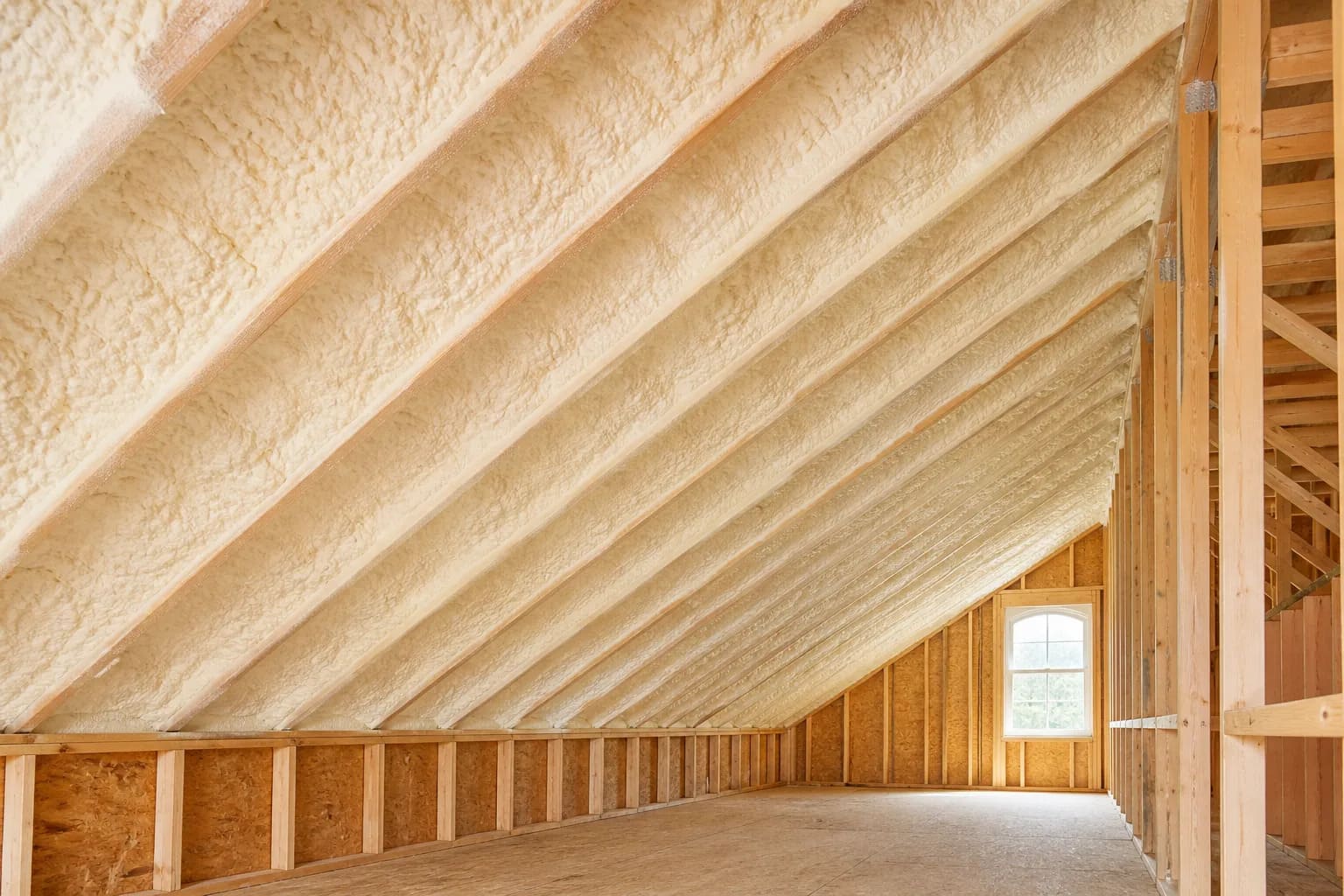
Spray foam insulation in Connecticut can cost approximately $2.30 to $10 per square foot of surface area installed, depending on the type of foam, application area, thickness, and preparation required. Smaller projects, such as insulating rim joists, typically cost less than complex attic or roofline applications. These figures are general budgeting estimates, not a quote from Superior Remodelers.
The best way to determine your spray foam insulation cost is to assess where insulation is needed, how much surface area must be covered, and whether the project requires air sealing, old insulation removal, or additional moisture-control work.
Superior Remodelers provides spray foam insulation services in Connecticut, helping homeowners and property owners explore insulation options for their buildings. If your home has cold rooms, drafts, or inconsistent indoor temperatures, a professional assessment can help determine whether spray foam is the right solution.
Request a spray foam insulation estimate to discuss your project, compare options, and understand the expected installation cost.
How Much Does Spray Foam Insulation Cost in Connecticut?
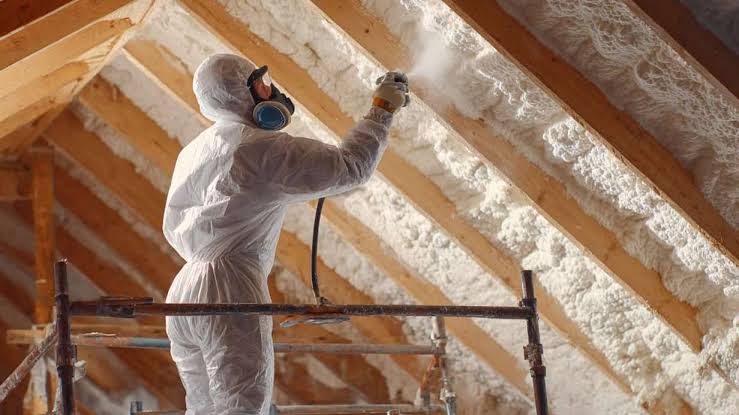
Spray foam insulation prices vary because not every project involves the same material, thickness, or installation conditions. Insulating a rim joist is different from spraying the roofline of a finished attic.
For initial budgeting, the following ranges provide a general indication of installed costs for common residential applications in Connecticut.
| Application | Approximate installed cost per sq. ft. |
| Rim joists and smaller targeted areas | 2.30–3.00 |
| Interior walls with open-cell foam | 2.75–3.25 |
| Basement, crawl space, garage, or ceiling applications | 3.50–4.00 |
| Interior walls with closed-cell foam | 5.50–6.50 |
| Attic roofline or cathedral ceiling with closed-cell foam | 8.75–10.00 |
These are indicative market ranges for specific applications, not guaranteed prices or a Superior Remodelers price list. Actual quotes may fall outside these ranges depending on project size, foam thickness, access, surface preparation, and local conditions.
Spray Foam Insulation Cost by Project Size
The total price depends on the area being insulated and the installed cost per square foot. The examples below illustrate how project size affects the budget.
| Insulated surface area | At $3 per sq. ft. | At $5 per sq. ft. | At $8 per sq. ft. |
| 200 sq. ft. | $600 | $1,000 | $1,600 |
| 500 sq. ft. | $1,500 | $2,500 | $4,000 |
| 1,000 sq. ft. | $3,000 | $5,000 | $8,000 |
| 1,500 sq. ft. | $4,500 | $7,500 | $12,000 |
These examples are simple calculations, not project quotations. They exclude any additional charges that may apply for demolition, difficult access, repairs, containment, or other work. The actual cost depends on the specified foam system and installation scope.
Important: The square footage in these calculations refers to the surface being insulated, not necessarily the home's floor area. A 2,000-square-foot house does not automatically require 2,000 square feet of spray foam.
Open-Cell vs. Closed-Cell Spray Foam: Which Is Better for Connecticut Homes?
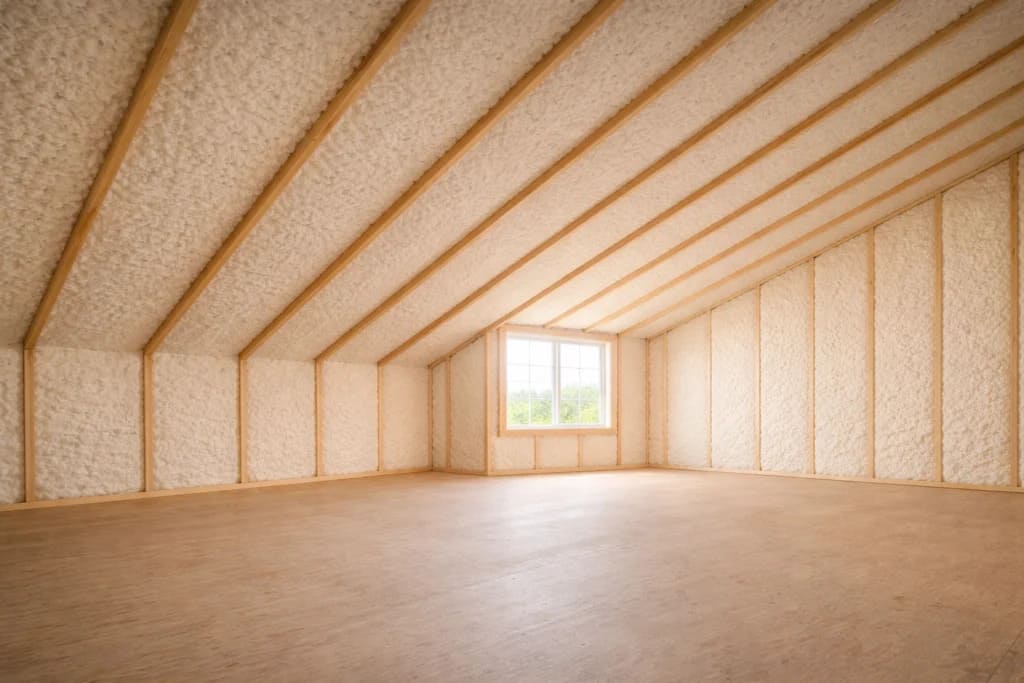
Choosing the right type of spray foam is about more than price. The material should suit the location, available space, moisture conditions, and performance goals.
| Feature | Open-Cell Spray Foam | Closed-Cell Spray Foam |
| Typical cost | Usually lower | Usually higher |
| Density | Lower | Higher |
| R-value per inch | Lower | Higher |
| Air sealing | Yes, when correctly installed | Yes, when correctly installed |
| Moisture behavior | More vapor-permeable | Less vapor-permeable at sufficient thickness |
| Common considerations | Cavity filling and sound absorption | Limited space, higher R-value per inch, and specific moisture-control needs |
Neither option is universally better. Closed-cell foam may be appropriate where a higher R-value is needed in a limited depth. Open-cell foam may be suitable for other assemblies where its vapor permeability and expansion characteristics are compatible with the building design.
The right specification depends on the complete wall or roof assembly—not just the insulation material. Ask your contractor to explain why the selected product is appropriate for your home.
Is Spray Foam Insulation Worth the Cost?
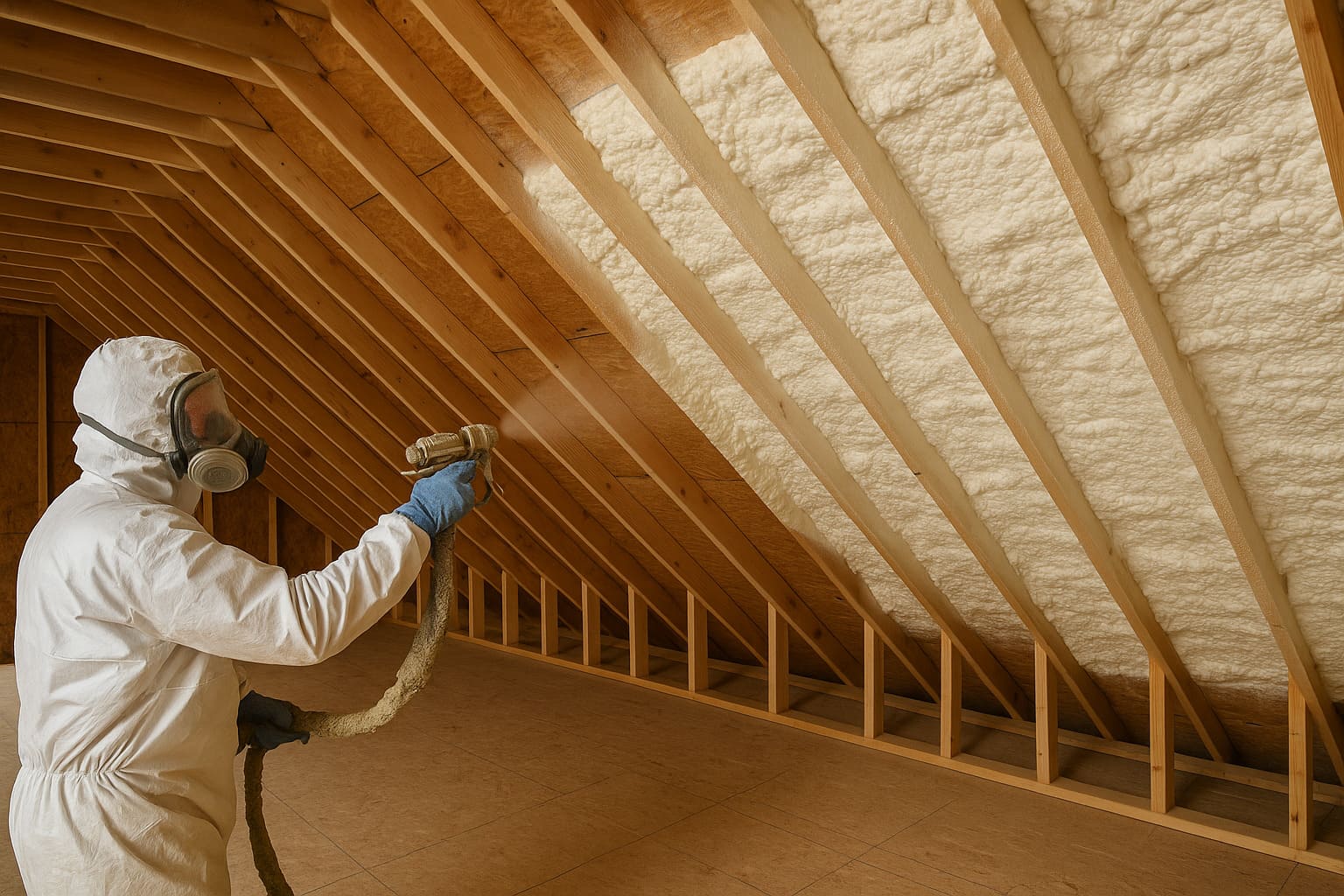
Spray foam can be a worthwhile investment when a building has significant air leakage, poorly insulated areas, or hard-to-seal cavities. Its value depends on the problem being addressed and the quality of the installation.
Potential benefits include:
- Improved indoor comfort: Reducing drafts and heat transfer can help make rooms more comfortable.
- Reduced air leakage: Properly installed foam can seal gaps that allow conditioned air to escape.
- Potential energy savings: Lower heating and cooling demand may reduce energy use, although results depend on the home and its existing insulation.
- Moisture-control benefits in suitable assemblies: Closed-cell foam can provide resistance to moisture vapor, but it does not fix every moisture problem.
- Insulation in difficult-to-reach areas: Spray foam can be useful around framing and irregular surfaces when other insulation methods are less suitable.
Energy savings are not guaranteed. The outcome depends on existing insulation, air leakage, HVAC efficiency, energy prices, and how the rest of the building performs.
Before investing in spray foam throughout the house, consider whether targeted air sealing or a different insulation material could achieve your goals at a lower cost.
Where Should You Install Spray Foam Insulation?
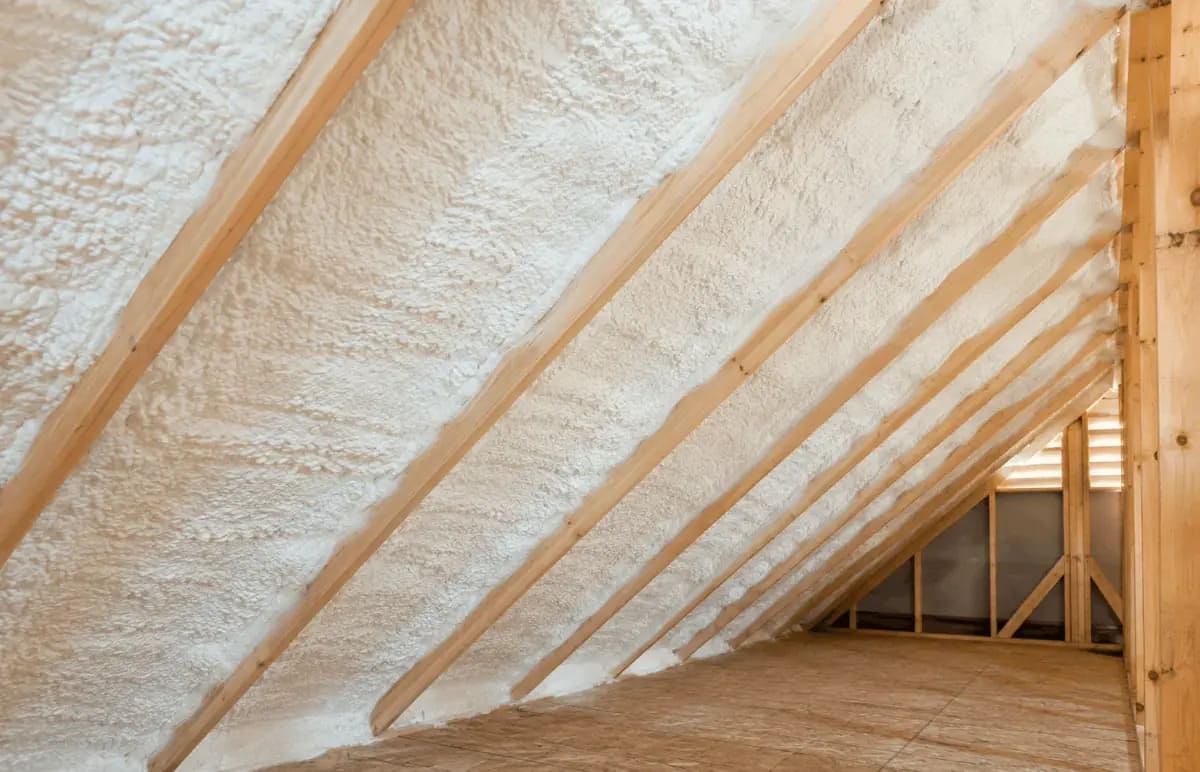
The best location depends on where your home loses heat, where air leaks occur, and how the building is designed.
Attic and Roofline Insulation
Attics are a common source of heat loss in Connecticut homes. Spray foam may be appropriate at selected rooflines, cathedral ceilings, and other areas where a well-designed insulated assembly is needed.
However, insulating the roofline is not always the most cost-effective attic upgrade. In an unconditioned attic, air sealing the ceiling plane and adding conventional attic insulation may be a better fit.
The right choice depends on the existing ventilation strategy, roof construction, moisture conditions, and whether the attic will remain vented or become part of the conditioned space.
Basement and Rim Joist Insulation
Basements can feel cold because of heat transfer through foundation walls and air leakage at the rim joist—the area where the floor framing meets the foundation.
Spray foam can be useful for sealing rim joists and insulating selected basement assemblies. Before installation, the contractor should assess water intrusion, condensation, foundation condition, and the appropriate approach for the specific wall type.
If you are planning a larger basement renovation, coordinate insulation with the overall design. Learn more about finishing a basement in Connecticut.
Crawl Space Insulation
Crawl spaces can contribute to cold floors, drafts, and moisture concerns. The appropriate insulation strategy depends on whether the crawl space is vented or unvented, the condition of the ground and foundation, and how moisture is managed.
Spray foam may be part of the solution, but it should not be used to conceal an unresolved water problem. Moisture control and ventilation or conditioning decisions need to be considered together.
Exterior Walls and Hard-to-Reach Cavities
Spray foam can be used in certain wall assemblies, but insulating existing walls may involve more complexity than a new-construction project. Access, wiring, plumbing, existing insulation, and the wall's ability to dry all affect the recommended method.
A contractor should determine whether spray foam, blown-in insulation, dense-pack cellulose, or another approach is appropriate before work begins.
Spray Foam vs. Fiberglass and Blown-In Insulation: Which Costs Less?
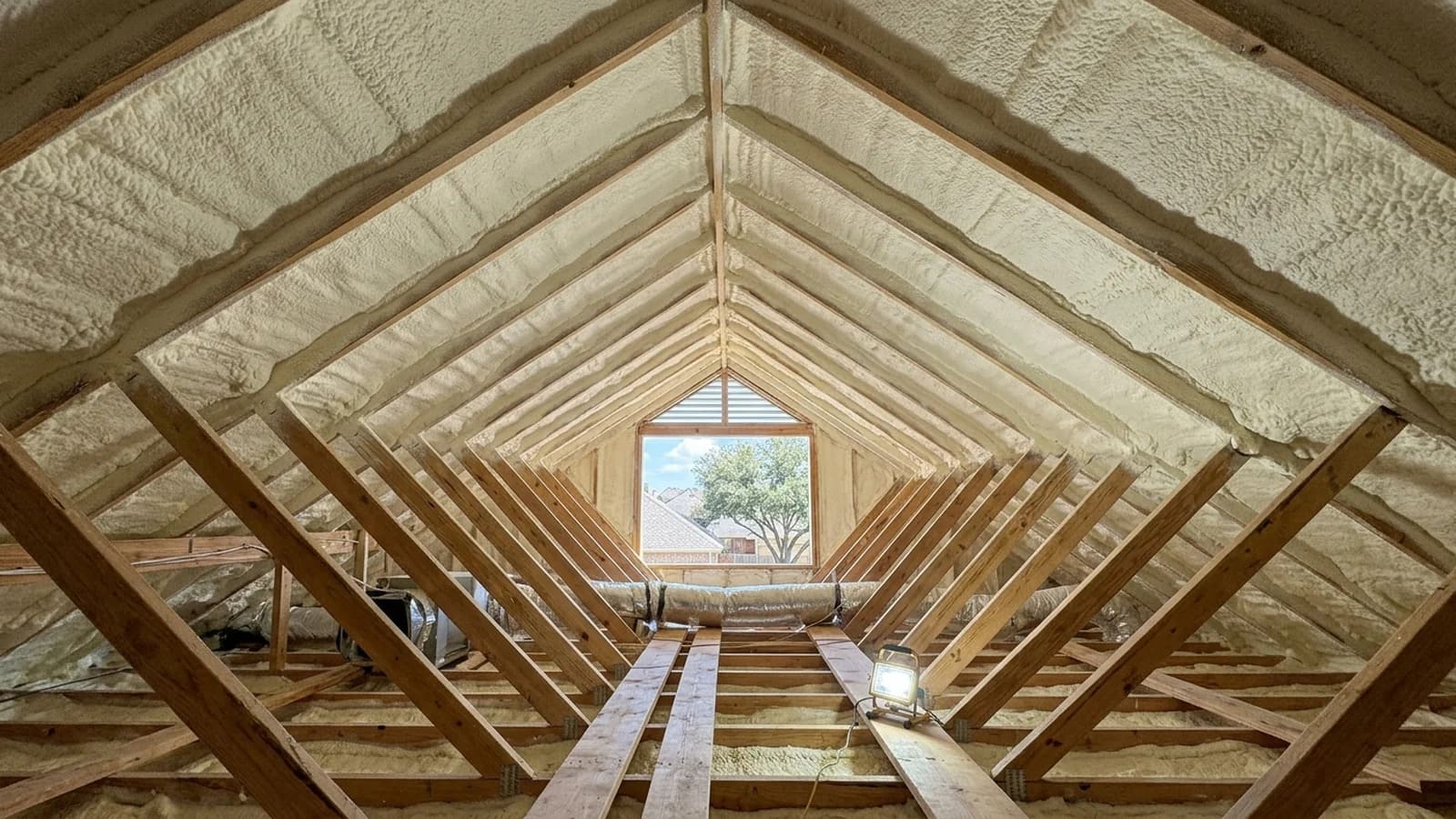
Connecticut's cold winters, humid summers, and seasonal temperature changes make insulation and air sealing important for home comfort. But the correct approach varies with the age, construction, and condition of each building.
Older Homes in Newtown, Danbury, and Litchfield County
Older homes may have irregular framing, limited insulation, or building assemblies that were designed around different ventilation practices. Before adding spray foam, it is important to understand the existing wall or roof construction and how moisture will be managed.
Homes in Stamford, Norwalk, and Fairfield County
For homes in Stamford, Norwalk, Fairfield, Greenwich, and surrounding communities, the right insulation plan depends on the specific property—not just its location. Attic layouts, additions, finished basements, and access constraints can all influence the cost.
Homeowners in Hartford, Waterbury, and New Haven
In Hartford, Waterbury, New Haven, and nearby communities, homeowners may be comparing targeted upgrades with a larger energy-efficiency renovation. An assessment can help prioritize air leakage, attic insulation, basement insulation, and other improvements based on the home's condition.
Superior Remodelers is based in Newtown, Connecticut, and provides spray foam insulation services in Connecticut and surrounding areas. Contact the team to confirm service availability for your town and discuss your project.
Can Connecticut Homeowners Get Rebates for Insulation?
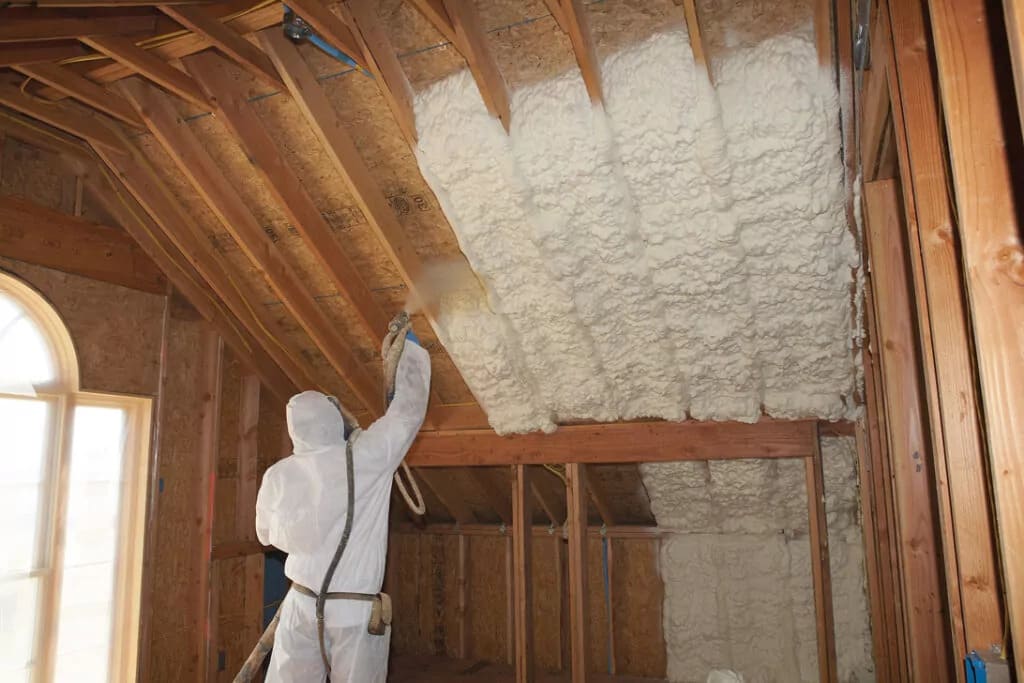
Energy-efficiency incentives may be available for certain home upgrades, but eligibility depends on the current program, the type of work, the home, and the participating contractor or assessment process.
Do not assume that every spray foam project qualifies for a rebate. Before starting work, check current Connecticut programs and ask whether your proposed insulation upgrade meets their requirements.
You can also ask your contractor whether an energy assessment or a broader insulation plan may help identify eligible improvements. Confirm all incentive terms and approval requirements directly with the program before relying on a rebate in your budget.
Why Contact Superior Remodelers?
Superior Remodelers offers spray foam insulation services in Connecticut and provides consultations and project estimates. The company also lists the Foam-LOK spray foam system on its website.
If you are unsure which areas of your home need insulation, start with an assessment of the existing conditions and your goals for comfort, air sealing, and energy performance.
Visit our spray foam insulation service page or call 888-330-8148 to discuss your project.
Superior Remodelers serves homeowners across Connecticut, including communities such as:
✓⃝ Fairfield County: Stamford, Norwalk, Danbury, Greenwich, Fairfield, and Westport
✓⃝ Greater New Haven: New Haven, Milford, Branford, and surrounding communities
✓⃝ Central Connecticut: Hartford, Newtown, and nearby towns
✓⃝ Other Connecticut communities: Contact us to confirm service availability in your area
If you're looking for a new roof, roof leak repair, or roof replacement near you, start with a professional assessment and a project-specific estimate.
Frequently Asked Questions About Spray Foam Insulation Cost
❔ How much does a new roof cost in Connecticut?
💬 A typical asphalt shingle roof replacement may cost around 10,000–20,000, while smaller projects may cost less and larger or more complex roofs may exceed $30,000. Premium roofing materials can cost significantly more. An inspection is needed to determine the price for your home.
❔ How much does spray foam insulation cost per square foot in Connecticut?
💬 Published Connecticut estimates vary by application. A useful initial budgeting range is approximately 2.30–10 per square foot installed for selected applications, from rim joists to more complex roofline insulation. Your actual price depends on foam type, thickness, access, and preparation.
❔ How much does it cost to spray foam a 1,000-square-foot area?
💬 At an illustrative installed rate of 3–8 per square foot, 1,000 square feet of insulated surface would cost approximately 3,000–8,000. This is a mathematical example, not a quote. The actual price depends on the foam system and project requirements.
❔ Is open-cell or closed-cell spray foam cheaper?
💬 Open-cell spray foam is generally less expensive. Closed-cell foam typically costs more but provides a higher R-value per inch and has different vapor-control characteristics. The best option depends on the assembly, available depth, and moisture-management requirements.
❔ Is spray foam insulation worth the extra cost?
💬 It can be worthwhile where air leakage, limited insulation depth, or difficult-to-seal cavities make it a good fit. However, conventional insulation combined with targeted air sealing may be more economical in some areas. Compare options based on the home's condition rather than price alone.
❔ Is spray foam good for Connecticut winters?
💬 Spray foam can help reduce heat transfer and air leakage when correctly specified and installed. Connecticut homes also need appropriate ventilation and moisture management, so the insulation strategy should suit the entire building assembly.
❔ Can spray foam be installed in an existing home?
💬 Yes. Spray foam can be used in existing homes, although access and preparation may be more complicated than in new construction. Some projects require opening wall or ceiling cavities, removing old insulation, or addressing moisture concerns first.
❔ Does spray foam insulation stop drafts?
💬 Properly installed spray foam can reduce air leakage through the areas where it is applied. Drafts may also come from windows, doors, ductwork, or other parts of the building, so insulating one area may not eliminate every draft.
❔ Does spray foam insulation prevent mold?
💬 Spray foam is not a mold-remediation treatment. It may help manage heat transfer and air leakage in an appropriately designed assembly, but leaks, wet materials, and excessive indoor humidity must be addressed separately. Existing mold or moisture damage should be assessed before insulation is installed.
❔ Is spray foam more expensive than fiberglass?
💬 Usually, spray foam has a higher upfront cost than fiberglass batts or blown-in insulation. It may offer additional air-sealing benefits, but the best choice depends on the location, installation quality, and the overall performance needed.
❔ Can I get an insulation rebate in Connecticut?
💬 Some energy-efficiency programs may offer incentives for eligible improvements. Program rules can change, and not every spray foam project qualifies. Verify current eligibility and requirements with the relevant program before scheduling work.
❔ How do I get a spray foam insulation estimate near me?
💬 Contact Superior Remodelers at 888-330-8148 or visit the company's spray foam insulation page. Share your town, the area you want insulated, and any comfort or moisture concerns so the team can discuss the next steps and confirm service availability.
What your neighbors are saying
